Tuning Trim and Running Attitude
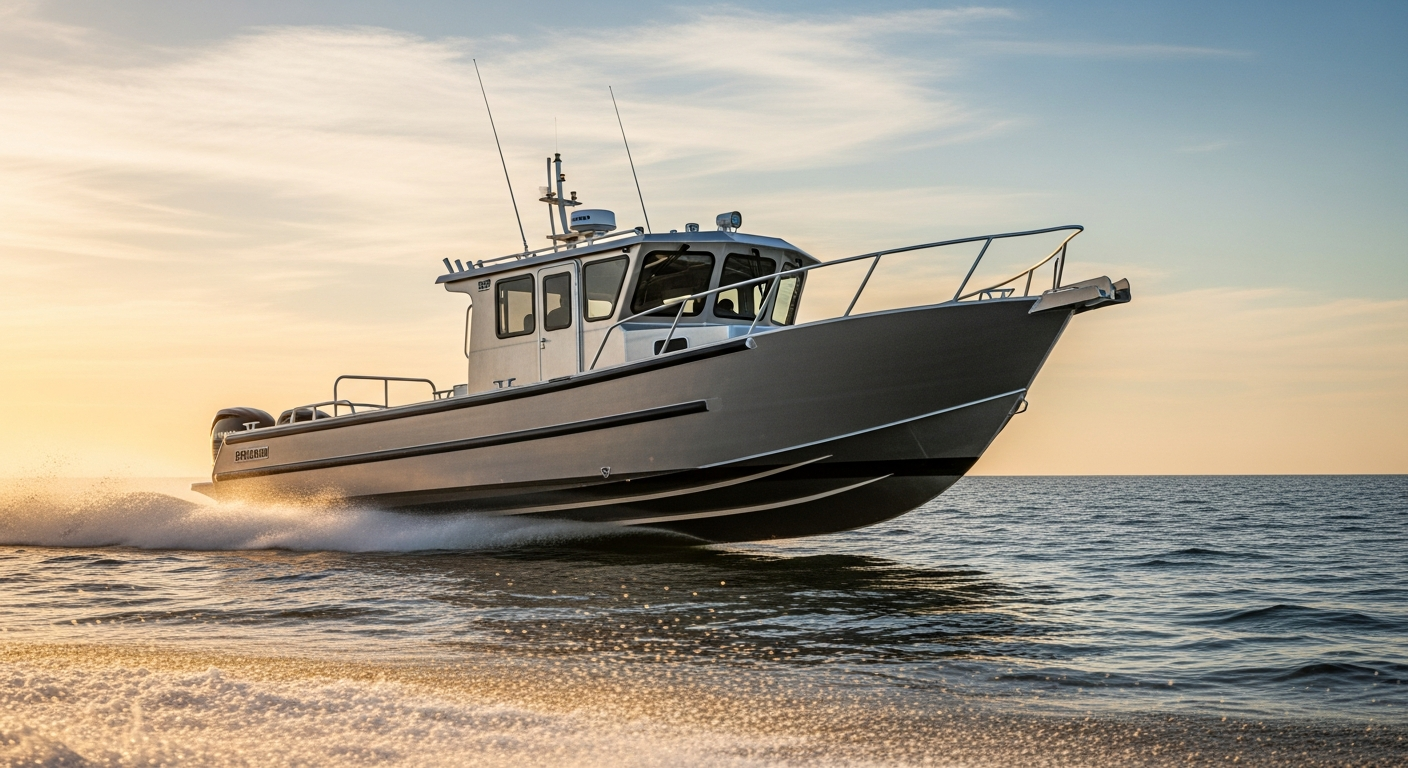
Two identical hulls can burn very different amounts of fuel at the same speed, and the difference often comes down to how the boat sits as it runs. Running attitude — the angle the hull holds against the water at speed — is one of the quietest levers in the whole design, and one of the most powerful.
Why attitude is everything
Every planing hull has a sweet spot where it lifts cleanly onto the water with the least drag. Run too bow-high and the boat pushes water like a plow, burning fuel and pounding through chop. Run too bow-down and it can chine-walk or bury the forefoot. The right attitude is a narrow band, and a well-designed hull finds it naturally across its working speed range.
Designing it in, then trimming it out
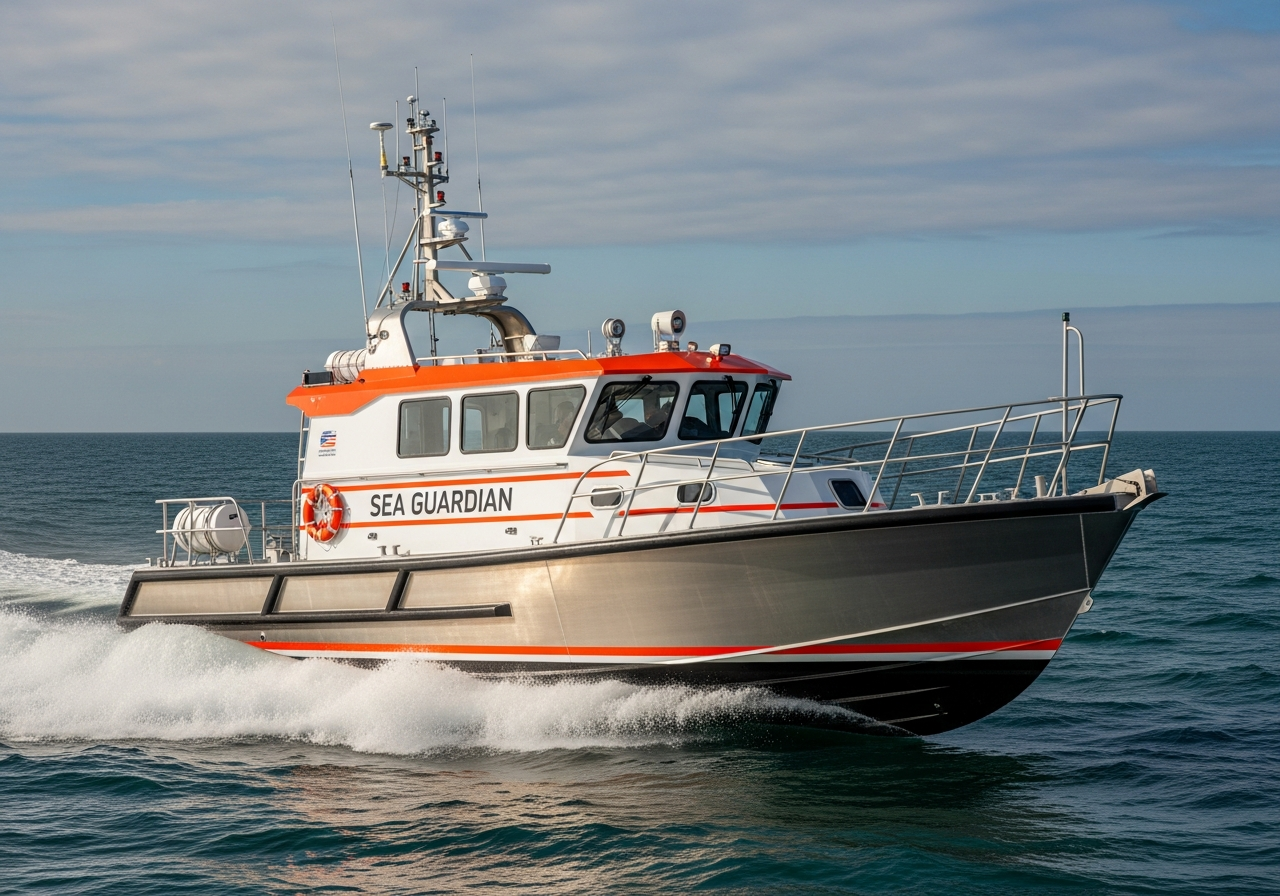
Most of the work happens on the drawing board — the position of the longitudinal center of gravity, the shape of the running surfaces, the deadrise aft. We place the weight and shape the bottom so the boat settles into its sweet spot on its own. Trim tabs and interceptors are the fine adjustment on top of that, letting the operator correct for load and sea state without fighting the helm.
On sea trials we confirm it. We log the attitude across the speed range, watch where the boat wants to settle, and tune the tabs so the efficient cruise the operator will actually run sits right in the clean band. A boat that finds its own trim is a boat the crew never has to think about.
The best-running boats look lazy at speed — flat, dry, unbothered. That calm is the whole point.
More Dispatches

Designing the Hull Stiffener Grid
The stringers and frames you never see decide whether a hull flexes or fails. Inside the grid that carries the load.
Engineering the Wave-Piercing Bow
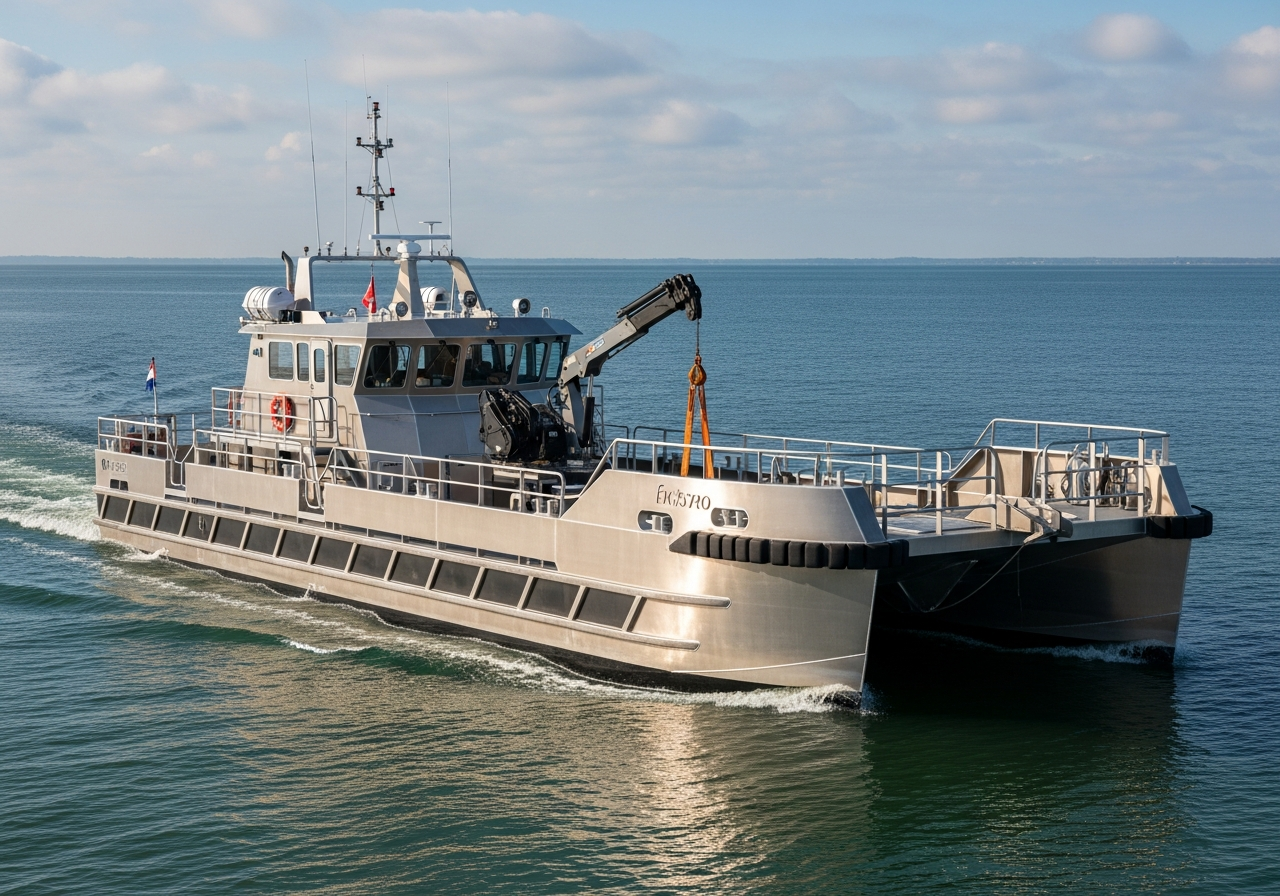
How a finer entry and reverse sheer let our catamarans hold speed through a head sea instead of fighting it.

Twin Catamaran Ferries Head to the Coast
A pair of aluminum passenger catamarans left the yard together this week, bound for a coastal commuter route.