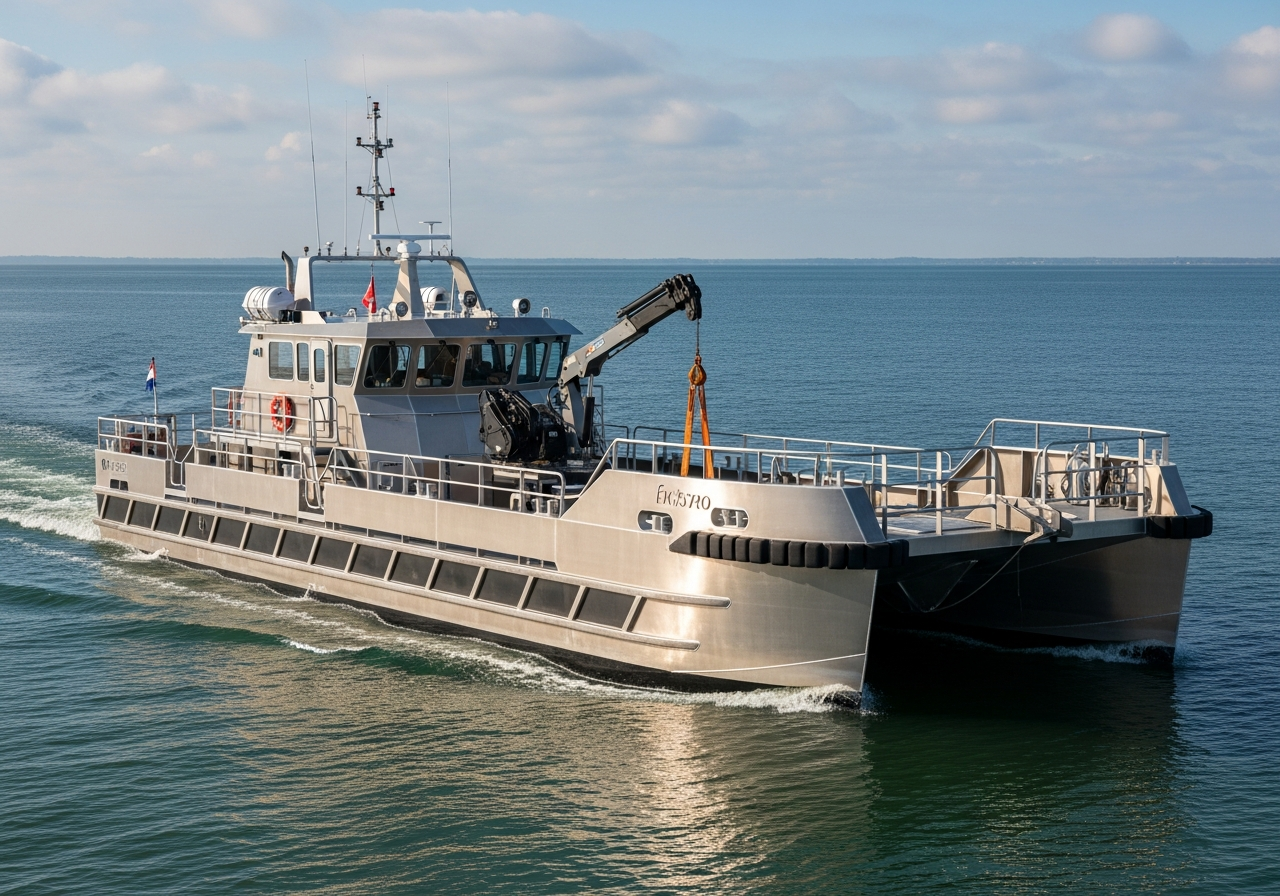
Engineering the Wave-Piercing Bow
A bow does one job above all others: it decides how the rest of the boat meets the water. Get it wrong and every wave becomes a wall. Our latest catamaran hulls carry a wave-piercing forefoot that trades the old habit of climbing over a sea for the discipline of slicing through it — and the ride speaks for itself.
Slicing instead of slamming
A conventional flared bow lifts as it meets a wave, then drops into the trough behind it. At speed, in a short Gulf chop, that becomes a relentless hobby-horse motion that punishes both crew and structure. A wave-piercing bow keeps a fine, deep entry that parts the water rather than riding up on it, so the hull tracks through the surface with far less pitch. The deck stays level, the spray stays low, and the boat keeps the speed it was carrying.
On a catamaran the effect compounds. Two slender piercing hulls share the load, and the bridgedeck is lifted clear of all but the largest seas. The result is a platform that feels planted at twenty-eight knots where a flared monohull would be backing off the throttle.
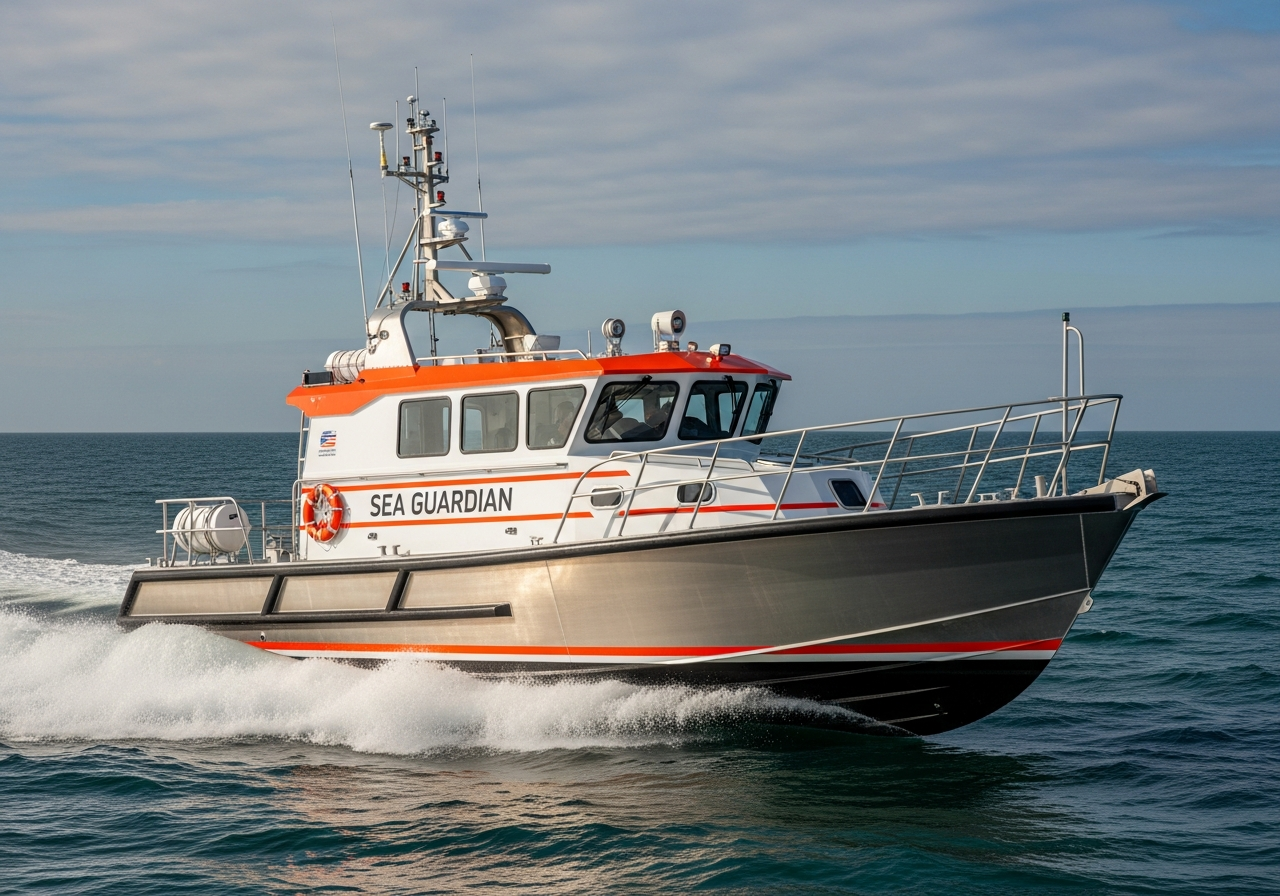
Drawing the line in aluminum
The geometry only matters if it can be built true. We loft each piercing bow as a developable aluminum surface so the plate wraps the frames without forced curvature or hidden stress. Tight frame spacing forward carries the slamming loads that do still arrive, and a reinforced stem bar takes the point loads of debris and dock. Every line on the drawing has to survive the weld shop — so we draw it for the welders, not just for the tank.
You feel a piercing bow most in the things that stop happening — the slam you brace for that never comes.
What the crew feels
The numbers — lower pitch acceleration, higher sustained speed, less green water on deck — all point the same direction, but the real test is the run home at the end of a long day. Crews step off these hulls less beaten up, and gear stays where it was stowed. A bow drawn to slice rather than slam is, in the end, a quieter and safer day on the water.
More Dispatches
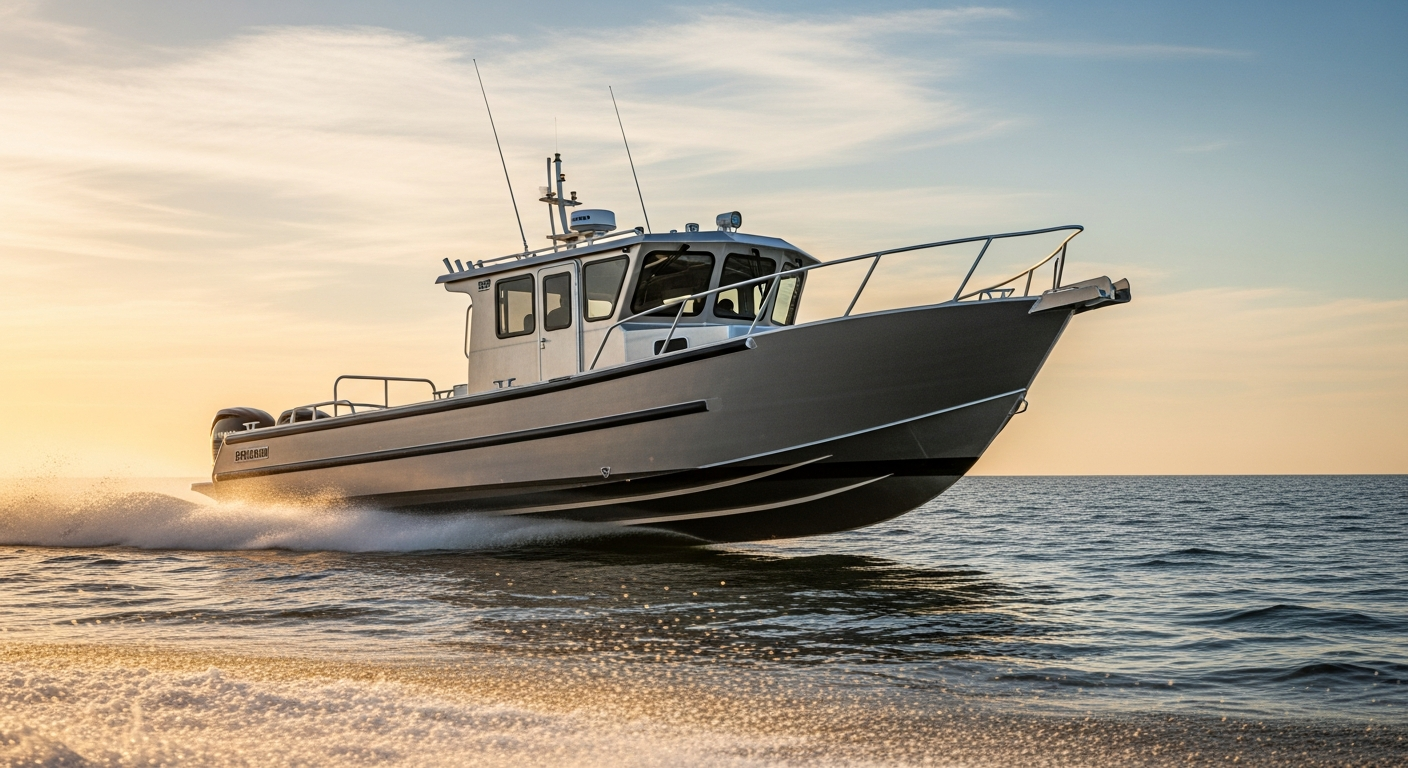
Tuning Trim and Running Attitude
A boat that runs bow-high wastes fuel and soaks the crew. How we dial in the attitude that makes a hull efficient.
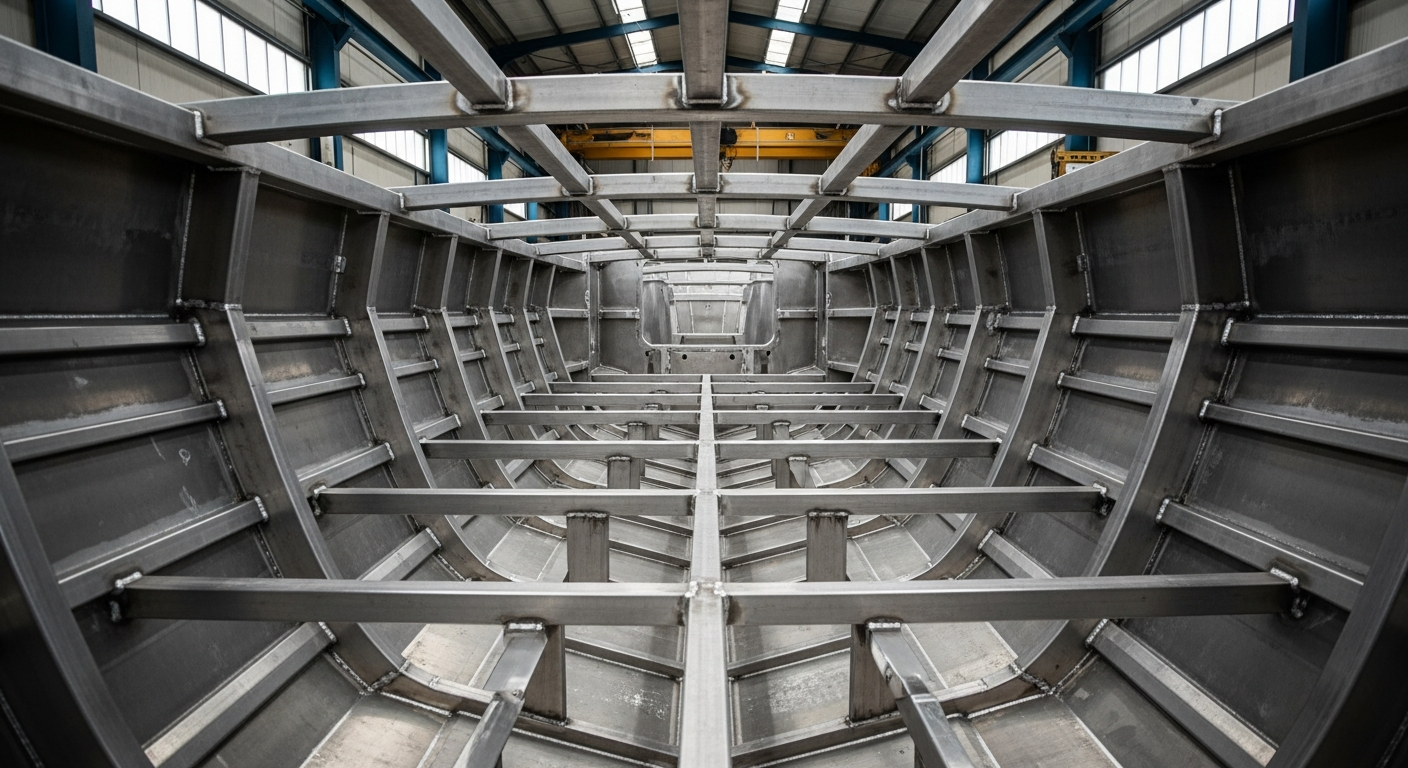
Designing the Hull Stiffener Grid
The stringers and frames you never see decide whether a hull flexes or fails. Inside the grid that carries the load.
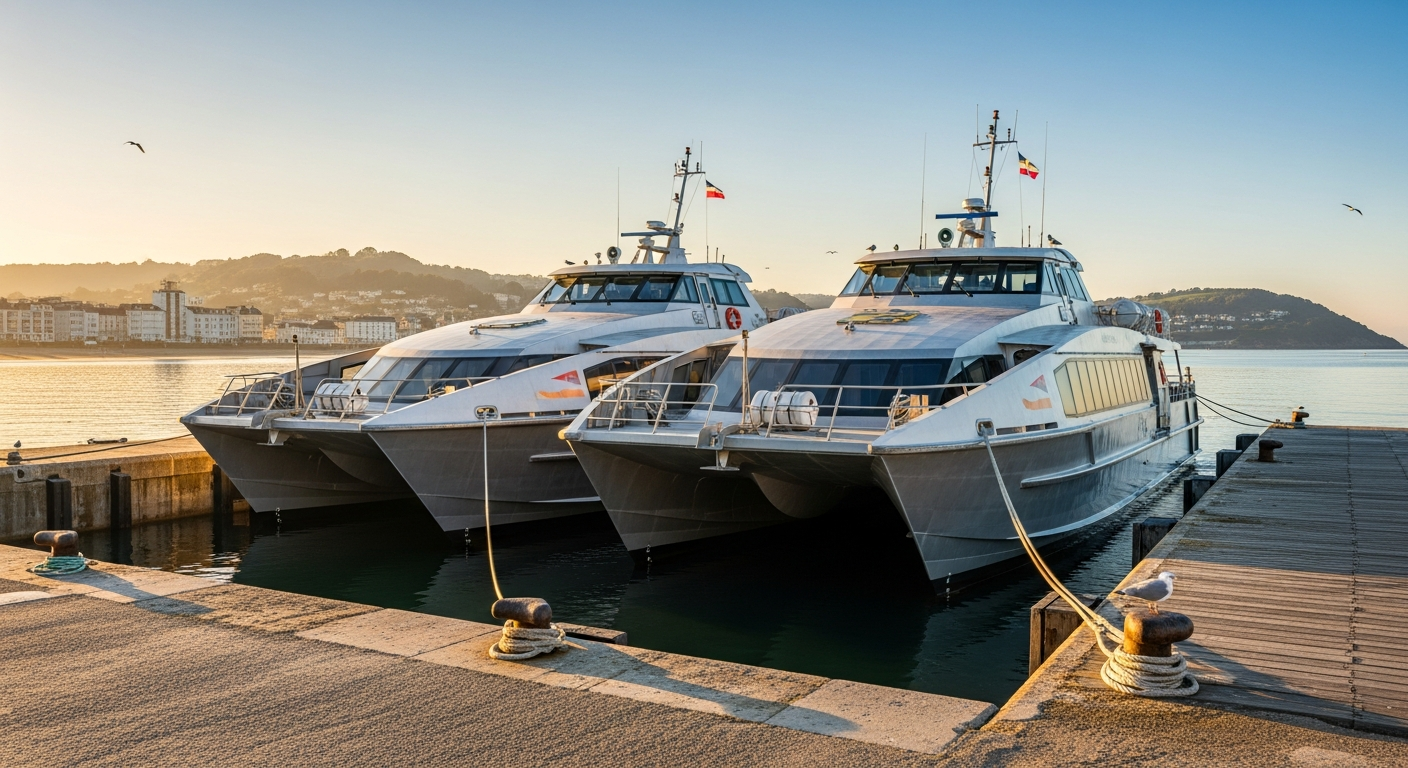
Twin Catamaran Ferries Head to the Coast
A pair of aluminum passenger catamarans left the yard together this week, bound for a coastal commuter route.