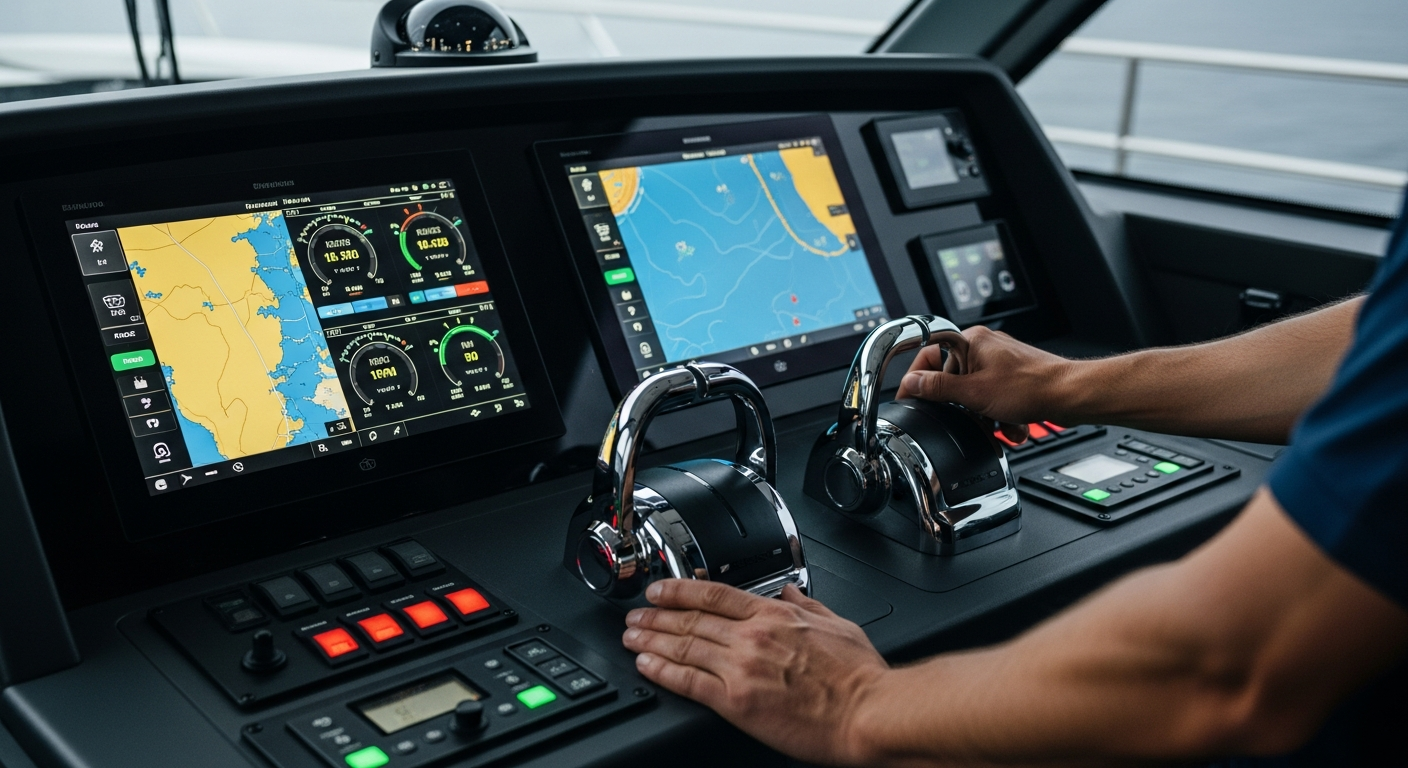
Calibrating the Speed and Fuel Curves
Owners ask about top speed, but they live with fuel burn. The number that decides whether a boat earns its keep is the relationship between the two — how many gallons an hour it takes to hold each speed. Building that curve honestly is one of the most useful things we do on a trial day.
Measuring, not estimating
We don't hand owners a brochure figure. We run the boat at steady rpm bands, hold each one until the readings settle, and log true speed over ground against measured fuel flow. Done across the whole range, those points draw a curve that shows exactly where the boat is efficient and where it starts to pay dearly for every extra knot.
Finding the economical cruise
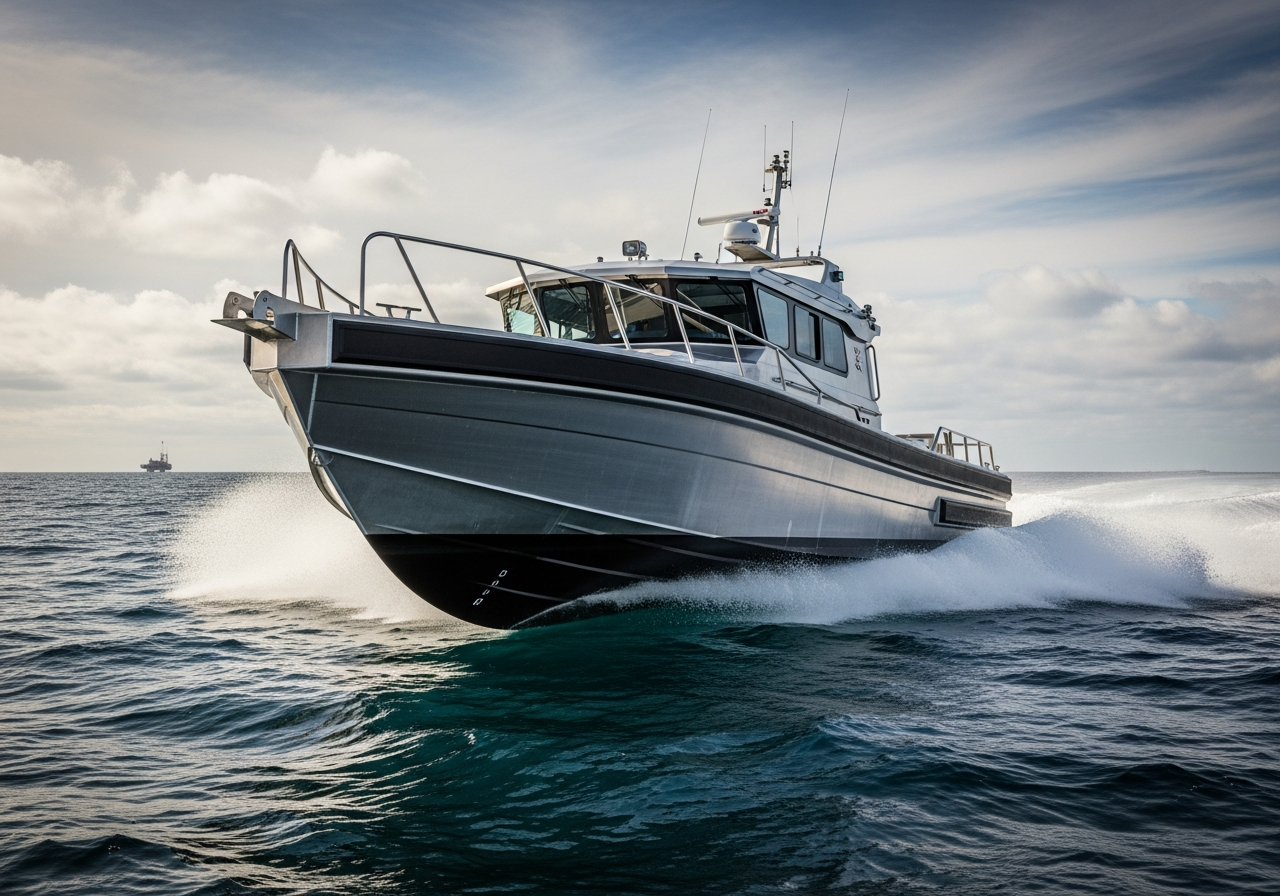
Almost every hull has a speed where it has just climbed cleanly onto plane and is running at its most efficient. That economical cruise is the speed an operator should plan a route around, and it is rarely the same as wide-open throttle. We mark it on the curve, confirm it holds when the boat is loaded, and hand it over as the number that matters.
We also run the loaded case, not just the light boat. A vessel that sips fuel empty but guzzles it full has told you nothing useful. The curve we deliver reflects the boat the crew will actually run, on the days they actually run it.
Top speed sells the boat. The fuel curve is what the owner thanks you for three years later.
More Dispatches
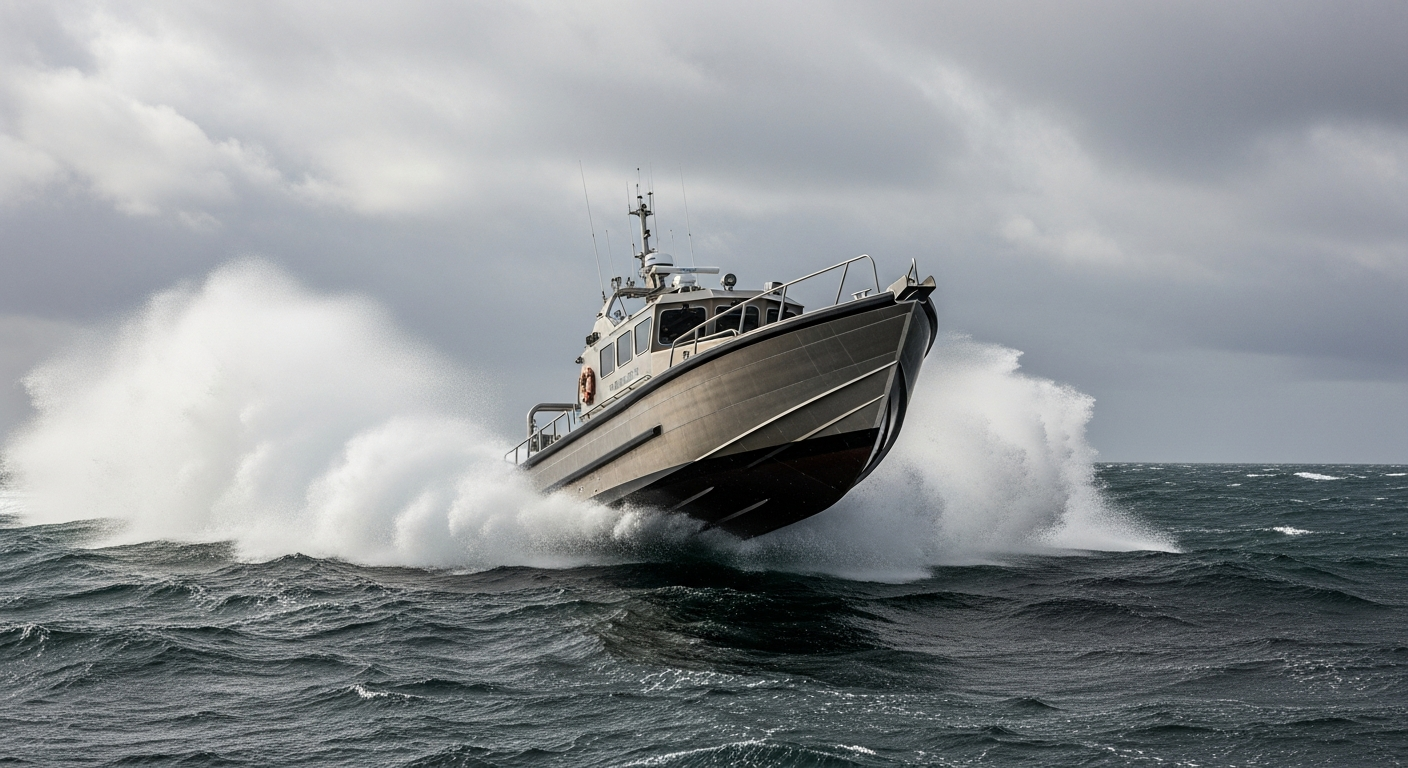
Heavy-Weather Trials Off the Jetties
Calm-water numbers only tell half the story. We take new hulls out when the weather turns — on purpose.
Reading the Water: A Day of Sea Trials
Before a hull is signed off, it has to prove itself offshore. Inside a full day of trials on a new crew boat.
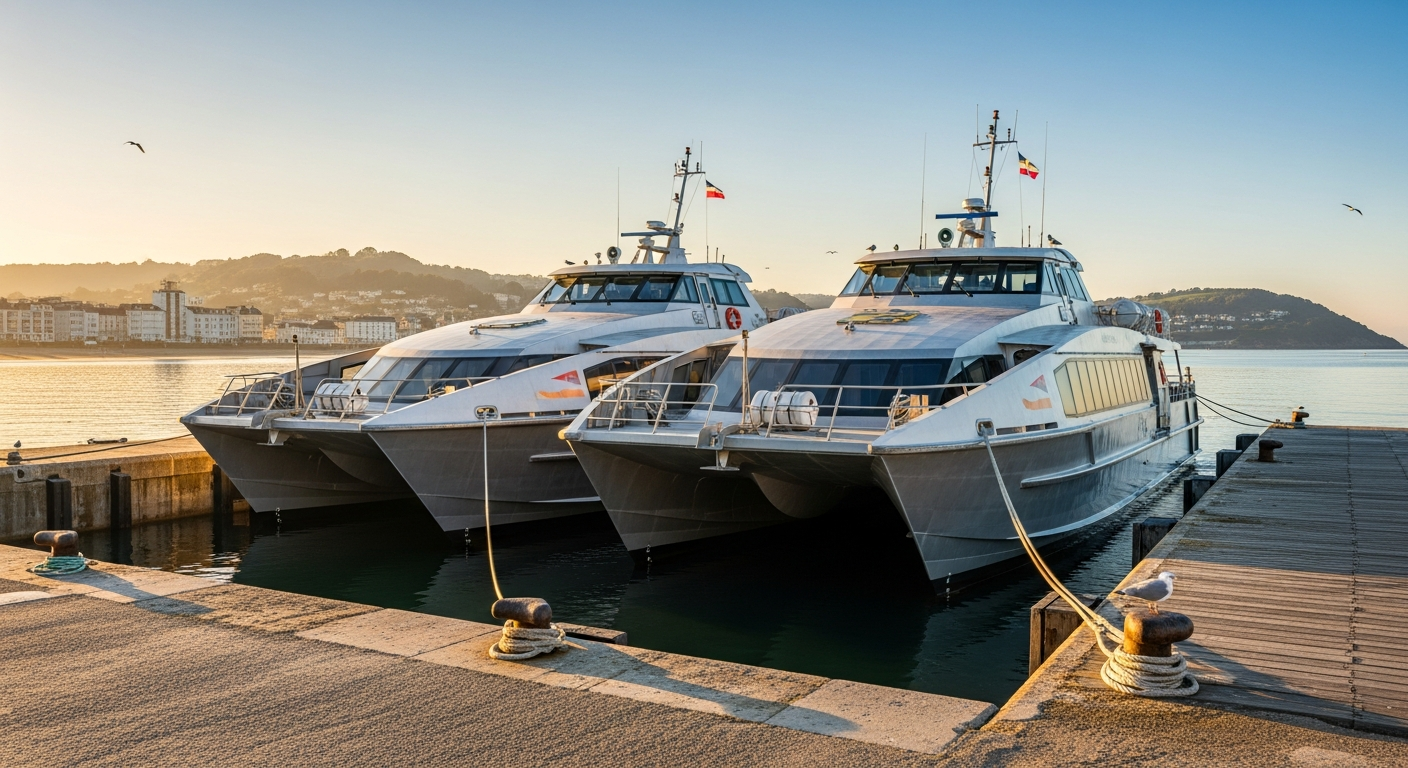
Twin Catamaran Ferries Head to the Coast
A pair of aluminum passenger catamarans left the yard together this week, bound for a coastal commuter route.